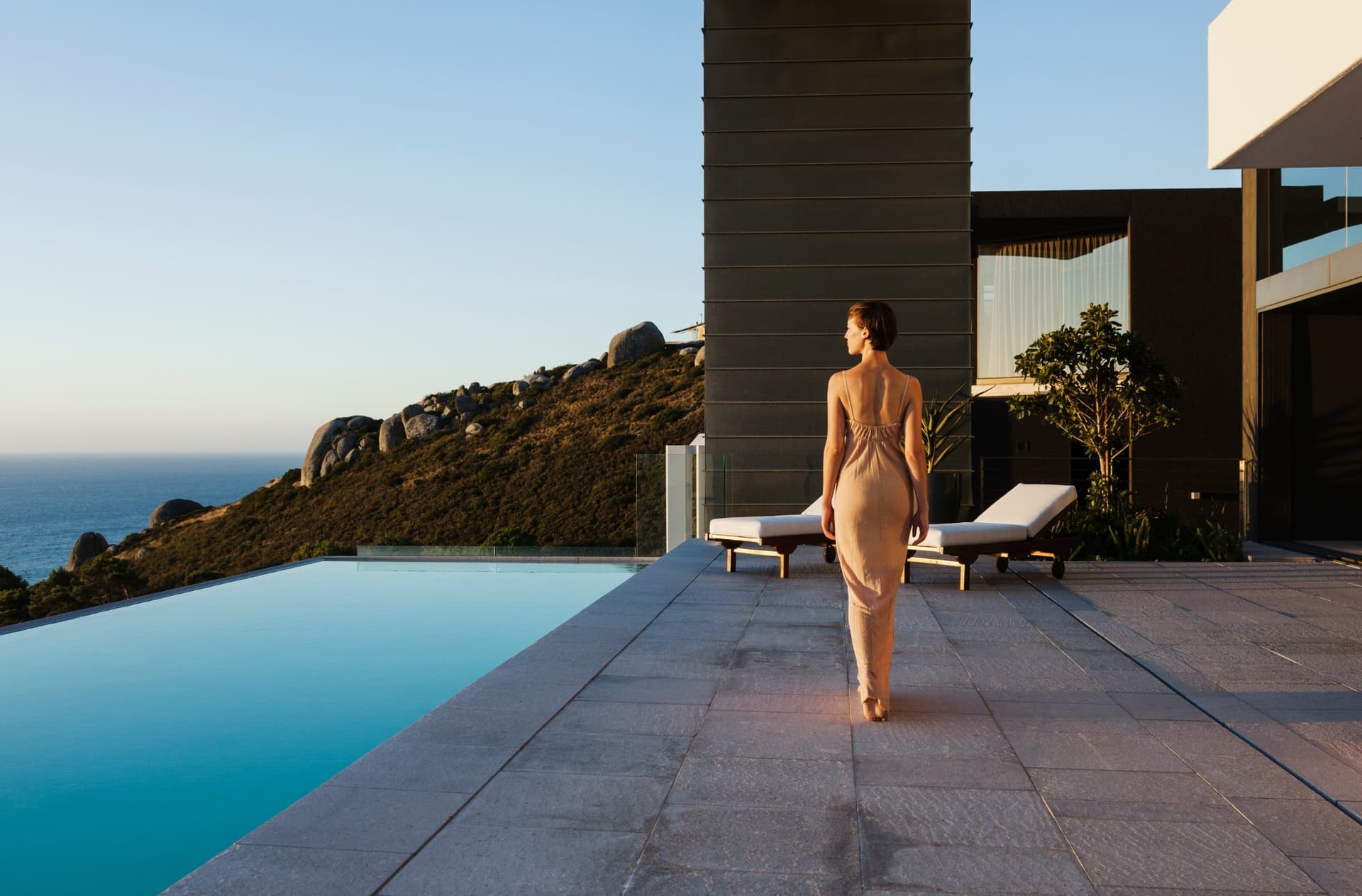
The Pacific coast of Costa Rica splits into two distinct versions of itself. In Guanacaste, the dry-season light turns the landscape gold, the Gulf of Papagayo is lined with sheltered coves and clear-water bays, and beach towns like Tamarindo hum with surf schools and open-air restaurants. In Puntarenas, the same ocean backs up against rainforest-covered hills, the air is heavier, and a single day can move from a jungle trail loud with howler monkeys to a sportfishing charter to a villa terrace above the canopy. Choosing between them comes down to the kind of trip you actually want to take.
Both regions offer exceptional villa stays, but the experience can feel very different. Guanacaste is generally the stronger choice when the beach is the main event and you want an easy rhythm between your villa, restaurants, boating, golf, and nearby towns. Puntarenas suits travelers who want more contrast, pairing the coast with rainforest excursions, wildlife, fishing, and a wider variety of day trips.

Neither province fits into one simple category. Guanacaste includes everything from the walkable streets of Las Catalinas and the beaches of Playa Conchal to the resort setting of Peninsula Papagayo and the surf culture of Tamarindo. Puntarenas stretches across a much larger section of Costa Rica’s Pacific coast, with villa destinations ranging from Tarcoles and Los Sueños to Jaco and Manuel Antonio.
This guide compares Guanacaste vs Puntarenas by beaches, activities, villas, weather, accessibility, and who each region suits best, so you can choose the part of Costa Rica that fits the trip you have in mind.
Still exploring your options? Browse our complete collection of Costa Rica villas to compare destinations, villa styles, and settings across the country.
Guanacaste vs Puntarenas at a Glance
| Category | Guanacaste | Puntarenas |
| Best for | Beach-focused vacations, golf, surfing, and established luxury communities | Rainforest, wildlife, national parks, sportfishing, and varied day trips |
| Landscape | Dry tropical forest, open coastline, and broad beaches | Lusher rainforest, dramatic hills, and jungle-backed coastline |
| Beaches | A wider circuit of well-known beach destinations for swimming, surfing, and boating | Scenic beaches where rainforest and wildlife are often part of the experience |
| Atmosphere | Relaxed, polished, and easy to navigate | More varied, adventurous, and nature-driven |
| Main airport | Daniel Oduber Quirós International Airport in Liberia | Juan Santamaría International Airport near San José |
| Representative areas | Playa Conchal, Playa Grande, Tamarindo, Nosara, and Peninsula Papagayo | Santa Teresa, Los Sueños, Jaco, Manuel Antonio, and Uvita |
| Villa experience | Beach homes, walkable communities, and estates within luxury resort settings | Rainforest retreats, marina estates, and private ocean-view villas |
| Weather | Drier overall, especially during the December to April dry season | Greener and wetter, with especially lush scenery during the green season |
| Best fit | Travelers who want a smooth, beach-led vacation | Travelers who want the coast mixed with nature and exploration |
Understanding the Difference Between Guanacaste and Puntarenas
Guanacaste and Puntarenas both stretch along Costa Rica’s Pacific coast, but each covers a wide range of landscapes and destinations. The difference is broader than choosing between two beach towns. You are comparing two regions that can each deliver several distinct versions of a Costa Rica villa vacation.
Guanacaste occupies the country’s northwestern corner and is generally accessed through Liberia International Airport. It is best known for its drier tropical climate, long Pacific coastline, and concentration of established beach and villa destinations.

The region has more variety than its resort reputation sometimes suggests. Peninsula Papagayo and Playa Conchal offer polished coastal settings with resort amenities, while Playa Flamingo combines beach access with a modern marina and strong boating culture. Tamarindo brings restaurants, nightlife, and surf, while nearby Playa Grande feels quieter and more nature-focused, with protected coastline and consistent waves. Farther south, Los Pargos and Nosara offer a lower-density experience shaped by surf, wellness, and a closer connection to the landscape. Rental Escapes’ Guanacaste portfolio reflects that range, extending well beyond the province’s best-known resort enclaves.

Puntarenas is even more geographically varied. The province follows a large portion of Costa Rica’s Pacific coastline, from the southern Nicoya Peninsula through the Central Pacific and into the lush South Pacific.
On the Nicoya Peninsula, Los Delfines combines beach access with golf and a laid-back residential setting, while Santa Teresa is shaped more by surfing, wellness, dining, and its relaxed coastal atmosphere. The Central Pacific includes Tarcoles, Los Sueños, and Jaco, where wildlife reserves, marina life, sportfishing, restaurants, and nightlife sit within relatively easy reach of San José.

Farther south, Manuel Antonio blends beaches with rainforest and national park access, while Escaleras and Uvita offer elevated villas, dramatic ocean views, wildlife, and a more secluded South Pacific experience. The common thread across all of it is contrast. Almost every destination in Puntarenas pairs the coast with something behind it, whether that’s a national park, a rainforest ridge, a marina, or an estuary.

Which Region Has Better Beaches?
Both Guanacaste and Puntarenas offer memorable beaches, but the experience is different enough that the better choice depends on what you want the beach to do for the trip.
Beaches in Guanacaste
Guanacaste has the stronger overall beach circuit. Its coastline includes broad swimming beaches, surf breaks, protected coves, marina communities, and polished resort settings, often within relatively easy reach of one another.
Playa Conchal is named for the crushed shells that make up much of its shoreline, giving the beach a faintly iridescent shimmer. Its generally clear water makes it especially popular for swimming and snorkeling. Playa Flamingo combines a wide beach with access to Marina Flamingo and some of the region’s best boating. Tamarindo is the most active option, with surf schools, restaurants, and nightlife close to the sand, while nearby Playa Langosta offers a quieter stretch of coast with a more residential feel.

Nearby Playa Grande offers a quieter surf setting beside Las Baulas National Marine Park, while Los Pargos and Nosara appeal to travelers looking for a lower-density beach experience shaped by surfing, wellness, and nature. Peninsula Papagayo adds another side of Guanacaste, with sheltered coves and calm bays that work especially well for swimming, paddleboarding, and private boat days.

Guanacaste is usually the better choice when long beach days are the center of the vacation. The range is wider, the beach towns are more established, and it is easier to build an itinerary around swimming, surfing, boating, dining, and returning to the villa without changing the overall rhythm of the trip.
Planning a beach-led escape? Explore luxury villas in Guanacaste across some of Costa Rica’s most distinctive coastal communities.
Beaches in Puntarenas
Puntarenas delivers a more dramatic relationship between beach and landscape. Here, the coastline often sits directly beneath rainforest-covered hills, with wildlife, national parks, and marine excursions forming part of the same experience.
In Manuel Antonio, jungle presses close to the sand, and beach days can come with the calls of howler monkeys or glimpses of white-faced capuchins moving through the canopy. Around Tarcoles, Punta Leona and Playa Blanca offer scenic coves close to Carara National Park and the Central Pacific’s wildlife corridors.

Jaco brings a busier surf-town atmosphere, while Santa Teresa pairs consistent waves with a laid-back setting on the southern Nicoya Peninsula. Farther south, Uvita and nearby South Pacific beaches feel more remote, with jungle, waterfalls, marine life, and seasonal whale watching shaping the experience as much as the shoreline itself.
Swimming conditions vary more across Puntarenas. Some beaches are calm and sheltered, while others are better known for surf, stronger currents, or changing tides. The payoff is a coastline that often feels more cinematic and closely connected to the surrounding rainforest.

Puntarenas is the stronger choice when you want the beach to be part of a wider nature-driven trip. You may spend the morning by the water, the afternoon spotting wildlife in a national park, and the evening back at a villa above the forest.
Looking for a more nature-driven stay? Browse luxury villas in Puntarenas across the Nicoya Peninsula, Central Pacific, and South Pacific.
The Verdict
Choose Guanacaste for the broader and more polished beach circuit, especially if swimming, surfing, boating, and easy coastal days are the main priorities.
Choose Puntarenas for beaches paired with rainforest, wildlife, national parks, and a stronger sense of exploration.
Things to Do in Guanacaste vs Puntarenas
The activity mix is where the difference between the two regions becomes especially clear. Guanacaste offers a strong range of coastal experiences, while Puntarenas leans more heavily into wildlife, national parks, sportfishing, and rainforest adventure.
Things to Do in Guanacaste
Guanacaste is easy to build around the coast. Surfing is one of the region’s defining experiences, with breaks around Tamarindo, Playa Grande, Nosara, and Los Pargos suited to everything from first lessons to more advanced sessions.

Boating is another major draw. Private catamaran cruises, yacht charters, snorkeling trips, and sunset sails depart from Playa Flamingo and Peninsula Papagayo, with late afternoons on the water offering some of Guanacaste’s best coastal views. Golf is also more prominent here, with ocean-view and resort courses around Playa Conchal, Peninsula Papagayo, and other luxury communities, often within easy reach of the beach and villa.

Away from the water, travelers can visit Rincón de la Vieja for hiking, waterfalls, hot springs, horseback riding, and volcanic landscapes. Wellness is especially strong around Nosara, while Las Catalinas adds hiking and mountain biking trails to its walkable coastal setting.
The overall advantage is flexibility. You can fill the itinerary with surf, golf, boating, spa days, and inland excursions without moving too far from the beach.
Looking for more ideas? Explore our guide to the best things to do in Guanacaste for a deeper look at the region’s beaches, wildlife, dining, golf, and day trips.
Things to Do in Puntarenas
Puntarenas has the stronger edge for travelers who want nature and adventure to shape the trip.
Manuel Antonio National Park is one of the province’s best-known attractions, combining rainforest trails, wildlife, and beaches in a single outing. White-faced capuchins, howler monkeys, sloths, and other wildlife are commonly seen in and around the park.

Carara National Park offers excellent birding and easy access from Tarcoles and Los Sueños. Boat tours on the Tarcoles River offer close views of the area’s American crocodiles, while scarlet macaws and other birdlife frequently appear along the surrounding forest and riverbanks.
Sportfishing is a major part of the Central Pacific experience, with Los Sueños serving as one of Costa Rica’s leading marina hubs. Private charters can target sailfish, marlin, tuna, and mahi-mahi, depending on the season and conditions.

Farther south, Uvita opens the door to Marino Ballena National Park, seasonal whale watching, waterfalls, and more remote coastal excursions. Santa Teresa and Jaco add surfing, dining, and nightlife, while Escaleras suits travelers who want a quieter base close to beaches, rainforest, and South Pacific scenery.
Puntarenas works especially well when the itinerary is meant to change from day to day. A single trip can combine national parks, marine excursions, wildlife tours, fishing, surfing, and long stretches of villa downtime. The variety is the appeal, but it also means more moving parts. Your Rental Escapes Concierge can coordinate the logistics in advance, from sportfishing charters and national park guides to transfers between destinations, so the itinerary stays varied without requiring you to manage each day from the ground.
The Verdict
Choose Guanacaste for the stronger mix of surfing, golf, boating, wellness, and easy coastal excursions.
Choose Puntarenas if you want your activity mix to change meaningfully from day to day, moving between the water, the forest, and the park rather than building around the coast.
Luxury Villas in Guanacaste vs Puntarenas
Villa stays reflect the wider character of each region. Guanacaste offers a strong mix of beachfront homes, walkable coastal communities, and resort-based estates. Puntarenas leans more toward rainforest settings, marina access, dramatic ocean views, and private estates designed around nature and adventure.
Luxury Villas in Guanacaste
Cielomar, Peninsula Papagayo: Set on a promontory 300 feet above the Pacific, Cielomar is built around sweeping ocean views. Its cantilevered infinity pool, open-air loggia, six bedrooms, private gym, movie theatre, and included cook, butler, and housekeeping team give it the feel of a private resort within Peninsula Papagayo.

Casa Brewer, Las Catalinas: Las Catalinas is one of the few places in Guanacaste where you can walk to the beach, to dinner, and to a trailhead without getting in a car, and Casa Brewer sits at the center of that. The six-bedroom villa by designer Beth Webb has a courtyard, guesthouse, open-air loggia, and poolside grotto, with a dedicated house manager handling whatever the stay requires.
Flamingo Blu, Playa Flamingo: With private beach access just steps away, Flamingo Blu puts the coastline at the center of the stay. The five-bedroom villa pairs an ocean-view infinity pool with hammocks, shaded lounging areas, a movie room, and open outdoor spaces, while an included housekeeper keeps the experience easy. Its Playa Flamingo setting also places boating, fishing, snorkeling, restaurants, and the marina within reach.

El Chante, Tamarindo: Designed like a private mini-resort, El Chante accommodates up to 19 guests across eight detached bungalows, giving extended families and groups room to gather without sacrificing privacy. The property combines ocean views, an infinity pool, a generous open-air living room, and a dedicated kids’ bedroom, with Tamarindo Beach, restaurants, and town life within walking distance. Breakfast preparation and housekeeping are included, while chef and babysitting services can be arranged for an additional cost.
Luxury Villas in Puntarenas
Seaside 2, Manuel Antonio: Few villas in Manuel Antonio are built to handle twenty guests without the stay feeling institutional, but Seaside 2 manages it across nine bedrooms, an infinity pool, professional kitchen, private spa, and theatre room, with daily gourmet breakfast included and a private SUV with driver handling transportation around the area.

Villa Firenze, Los Sueños Resort: Set on nearly an acre of private rainforest within Los Sueños Resort & Marina, Villa Firenze brings an Italian-palazzo aesthetic to the Central Pacific. Its standout features include an infinity pool, private chef, helipad, golf simulator, and an all-inclusive approach that fits naturally with the area’s golf, marina, and sportfishing lifestyle.
Casa Heliconia, Escaleras: Set within the gated community of Escaleras Village, Casa Heliconia brings the South Pacific landscape directly into the stay. The four-bedroom villa pairs ocean and jungle views with floor-to-ceiling glass, teak ceilings, and a treetop saltwater infinity pool positioned for sunset. Restaurants, groceries, a café, and spa services are close by, while the surrounding beaches, waterfalls, and rainforest remain within easy reach.

Casa Lanui, Santa Teresa: Set within North Creek Estate with direct access to Santa Teresa’s white-sand beach, Casa Lanui brings the region’s surf culture straight into the villa experience. The seven-bedroom home accommodates up to 18 guests and pairs a private pool and relaxed indoor-outdoor design with consistent waves, restaurants, and shops close by. Housekeeping and breakfast preparation are included, making it a strong fit for groups that want the freedom of Santa Teresa without giving up a fully serviced stay.
The Verdict
Choose Guanacaste for villas that integrate naturally with resort amenities, walkable beach communities, and settings where the coast is always close.
Choose Puntarenas if seclusion and setting matter as much as square footage, and you want the property itself to feel like part of the landscape.
Which Is Better for Families?
Both regions work well for family villa vacations, but the better choice depends largely on the ages of the children and how active you want the itinerary to be.
Guanacaste for Families
Guanacaste is usually the easier choice for families who want a simple, beach-led vacation. Many destinations offer a straightforward rhythm built around swimming, short outings, casual dining, and plenty of time at the villa.
Resort communities and walkable areas can make daily planning easier, especially for families with younger children. Golf carts, beach clubs, nearby restaurants, and organized activities reduce the amount of time spent coordinating transportation. Villas with generous indoor-outdoor living spaces also give families room to gather, spread out, and move easily between pool time, meals, and quieter afternoons at home.

The drier climate is another advantage for travelers visiting during the December-to-April high season, when predictable beach weather often matters more than packing in a long list of excursions.
Puntarenas for Families
Puntarenas is a stronger fit for families who want wildlife and adventure to play a bigger role in the trip. National parks, river tours, rainforest hikes, sportfishing, zip-lining, horseback riding, and marine excursions give children and teenagers more variety beyond the beach.

Manuel Antonio is especially appealing for families interested in monkeys, sloths, rainforest trails, and beaches in the same outing. Tarcoles and Los Sueños work well for groups that want easier access from San José along with fishing, boating, wildlife, and villa downtime. Farther south, Uvita and Escaleras suit families who are comfortable with longer transfers in exchange for a more secluded, nature-rich setting.
Puntarenas can require more planning, but it often rewards active families with a more varied trip.
Best for Families
Guanacaste is generally the easier choice for families with younger children who want simple beach days and resort conveniences.
Puntarenas may be more rewarding for older children and active multigenerational groups interested in wildlife, fishing, national parks, and rainforest excursions.
Which Is Better for Couples?
Both regions work well for couples, but they suit different styles of trip.
Guanacaste for Couples
Guanacaste is the stronger choice for couples who want an easy, polished beach vacation. Days can revolve around the villa, long lunches, spa treatments, sunset cruises, and dinners in nearby coastal towns without requiring a packed itinerary.
Las Catalinas adds walkability, with restaurants, trails, and the beach close together. Nosara leans more toward wellness, surf, and low-key dining, while Playa Flamingo and Peninsula Papagayo offer easier access to boating, golf, beach clubs, and resort amenities.

Beyond the coast, couples can also spend a day hiking through Guanacaste’s dry tropical landscapes before returning to the villa for a swim, sunset drinks, or a private dinner. The appeal is simplicity: the region makes it easy to mix active mornings with slow afternoons without letting the itinerary take over the trip.

Puntarenas for Couples
Puntarenas suits couples who want more contrast between relaxation and exploration. The setting often feels more dramatic, with rainforest-covered hills, wildlife, national parks, marinas, and elevated ocean views shaping the trip.
Santa Teresa combines surf, wellness, and a strong dining scene, while Manuel Antonio pairs beaches with rainforest and wildlife. Los Sueños works well for couples interested in sportfishing, golf, and marina life, and the South Pacific offers a more secluded experience around places such as Escaleras and Uvita.

Puntarenas can feel more adventurous, especially for couples who want villa time mixed with excursions and changing scenery.
Best for Couples
Guanacaste is generally the better fit for couples who want slow mornings, spa treatments, sunset cruises, and easy coastal dining.
Puntarenas suits couples looking for more contrast between villa time, wildlife, rainforest excursions, and evenings around the marina or beach towns.
Which Is Easier to Reach?
Access depends less on the province as a whole and more on the specific destination, but Guanacaste generally has the edge for travelers who want to reach the coast quickly after landing.
Getting to Guanacaste
Most international travelers arrive through Liberia International Airport, which places many of Guanacaste’s main beach destinations within a relatively manageable drive.
Peninsula Papagayo and Playa Hermosa are among the easiest luxury areas to reach, generally around 30 to 45 minutes from Liberia International Airport. Playa Flamingo and Playa Conchal are usually about 1 to 1.25 hours away, while Tamarindo and Playa Grande are typically around 1.25 to 1.5 hours by road. Destinations farther south require more time, with Los Pargos generally around 1.5 hours from the airport and Nosara closer to 2 to 2.5 hours, depending on traffic, road conditions, and the exact location of the villa.
This makes Guanacaste especially appealing for shorter stays, family trips, and vacations where minimizing transfer time is a priority.
Getting to Puntarenas
Puntarenas is more varied. Most travelers arrive through Juan Santamaría International Airport near San José, but transfer times change significantly depending on where they are staying.
Tarcoles is roughly 1.25 to 1.5 hours from Juan Santamaría International Airport, while Los Sueños and Jaco are generally around 1.5 to 2 hours away. Manuel Antonio usually takes about 3 to 4 hours by road. Farther afield, Uvita and Escaleras are typically around 3.5 to 5 hours from the airport, while Santa Teresa and Los Delfines generally require about 5 hours when traveling by road and ferry. Actual transfer times can vary considerably with traffic, road conditions, weather, ferry schedules, and the exact location of the villa.
The extra distance can be worthwhile, especially for travelers seeking quieter beaches, rainforest settings, or the South Pacific, but it should be part of the planning process.
Your Rental Escapes Concierge can arrange private airport transfers, domestic flights, ferry connections, and ground transportation based on the villa and itinerary.
Access Verdict
Guanacaste generally offers the easier arrival, particularly for travelers staying in the northern beach communities close to Liberia.
Puntarenas requires more destination-specific planning, but Tarcoles, Los Sueños, and Jaco remain relatively accessible from San José, while longer transfers open up the more secluded settings of the Nicoya Peninsula and South Pacific.
Weather: Guanacaste vs Puntarenas
Weather is one of the clearest differences between the two regions. Guanacaste is generally drier and sunnier, while Puntarenas is greener, more humid, and more affected by the Pacific rainy season.
Weather in Guanacaste
Guanacaste has one of Costa Rica’s driest climates, especially along the northern Pacific coast. The dry season usually runs from December through April, bringing extended stretches of sunshine, lower humidity, and long dry evenings where the light stays golden until the sun drops straight into the Pacific.

This is the region’s busiest travel period and the best fit for travelers prioritizing beach days, boating, golf, and outdoor dining. By late in the dry season, some landscapes take on a more golden, sunbaked appearance rather than the deep green often associated with Costa Rica.

The green season runs from roughly May through November. Rainfall increases, but mornings are often bright and clear, with showers developing later in the day. The landscape becomes noticeably greener, crowds are lighter, and surf conditions can improve in some areas.
Weather in Puntarenas
Puntarenas is generally wetter and more humid, though conditions vary considerably across such a long province. The Central Pacific around Jaco, Tarcoles, and Manuel Antonio receives more rain than Guanacaste, while the South Pacific around Uvita and Escaleras is lusher still.
The dry season from December through April remains the most popular time to visit, with better odds of clear skies and long outdoor days. Even then, the region usually looks greener than Guanacaste because of its denser rainforest and higher annual rainfall.
During the green season, showers can build quickly in the afternoon or evening, sometimes arriving hard before easing just as fast. The wetter months also bring dramatic waterfalls, dense vegetation, fewer visitors, and strong wildlife viewing.

Weather Verdict
Guanacaste offers the best odds of consistently dry beach weather, particularly during the December-to-April high season.
Puntarenas is the better choice for travelers drawn to lush rainforest scenery and willing to plan around more frequent tropical showers, especially during the green season.
Guanacaste or Puntarenas: Which Should You Choose?
There is no universal winner. The better region depends on whether you want the beach to define the trip or serve as one part of a broader Costa Rica experience.
Choose Guanacaste If:
- Long beach days are the main priority
- You want drier weather and a more predictable winter escape
- Surfing, boating, golf, and beach clubs are central to the trip
- You prefer established coastal communities with restaurants and amenities nearby
- You want a smoother rhythm with less day-to-day planning
- Easy access from Liberia International Airport matters
Guanacaste is usually the stronger fit for travelers who want a polished Pacific coast vacation with plenty of variety, but without losing the relaxed pace of a beach trip.

Choose Puntarenas If:
- You want rainforest and wildlife close to the coast
- National parks and nature excursions are major priorities
- Sportfishing, marina life, and adventure activities appeal to your group
- You prefer more dramatic landscapes and stronger contrasts between destinations
- You are comfortable with longer transfers in exchange for greater seclusion
- You want the option to explore the Nicoya Peninsula, Central Pacific, or South Pacific
- You want the villa to feel like a base camp as much as a retreat
Puntarenas is better suited to travelers who want the villa to serve as a base for a more varied itinerary shaped by beaches, rainforest, wildlife, fishing, and exploration.

For longer stays, combining both regions can work well, especially if you want a few easy beach days in Guanacaste followed by a more nature-driven stay in Puntarenas. The two regions are distinct enough that the trip feels genuinely varied.
Guanacaste vs Puntarenas FAQ
Do I need a visa to visit Guanacaste or Puntarenas?
Entry requirements are the same because both regions are in Costa Rica. Visa rules depend on your nationality and length of stay, so travelers should confirm current passport and entry requirements before departure.
Is Guanacaste or Puntarenas easier to reach?
Guanacaste is generally easier for travelers flying into Liberia International Airport, with many beach destinations around 30 minutes to 1.5 hours away. Puntarenas is usually accessed from San José, with transfer times ranging from roughly 1.25 hours for Tarcoles to several hours for Santa Teresa, Uvita, and other farther-flung destinations.
Which region has better beaches, Guanacaste or Puntarenas?
Guanacaste has the stronger overall beach circuit, with a wider mix of swimming beaches, surf towns, protected coves, and marina communities. Puntarenas offers more dramatic jungle-backed beaches and is better suited to travelers who want the coast paired with rainforest, wildlife, and national parks.
Is Guanacaste or Puntarenas better for families?
Guanacaste is often easier for families with younger children because of its beach-focused rhythm, resort conveniences, and shorter transfers from Liberia. Puntarenas may be a better fit for active families and older children interested in wildlife, national parks, fishing, and rainforest excursions.
Is Guanacaste or Puntarenas better for couples?
Guanacaste suits couples looking for relaxed beach days, spa treatments, boating, and polished coastal dining. Puntarenas works especially well for couples who want rainforest scenery, wildlife, adventure, and more contrast between villa time and excursions.
Is Guanacaste drier than Puntarenas?
Yes. Guanacaste generally has a drier climate, especially along the northern Pacific coast. Puntarenas receives more rainfall and remains greener throughout much of the year, particularly around Manuel Antonio and the South Pacific.
Which region is better for wildlife?
Puntarenas has the edge for travelers making wildlife a central part of the trip. Manuel Antonio National Park, Carara National Park, the Tarcoles River, and the South Pacific offer excellent opportunities to see monkeys, sloths, crocodiles, scarlet macaws, whales, and other wildlife. Guanacaste also offers strong nature experiences, including marine parks, dry forest, and nesting beaches.
When is the best time to visit Guanacaste and Puntarenas?
December through April is the most popular period for both regions because it offers the best odds of dry weather. The green season from May through November brings lusher scenery and fewer visitors, though Puntarenas generally experiences more frequent and heavier rainfall.
Can you combine Guanacaste and Puntarenas in one trip?
Yes, particularly for stays of 10 days or longer. Combining the regions allows you to pair Guanacaste’s beach-led atmosphere with the rainforest, wildlife, and adventure experiences of Puntarenas. Transfer time should be considered when choosing the specific destinations.
What services are included with a Rental Escapes villa?
Inclusions vary by property. Depending on the villa, your stay may include housekeeping, a private chef or cook, butler service, a house manager, breakfast, transportation, or access to resort facilities. Your Villa Specialist can explain exactly what is included before booking, while your Concierge can arrange additional services and experiences.
Which region is better for dining and nightlife?
Guanacaste offers a broader circuit of polished coastal dining, particularly around Tamarindo, Las Catalinas, Playa Flamingo, and Nosara. Puntarenas has stronger nightlife in Jaco, a growing dining scene in Santa Teresa, and marina restaurants around Los Sueños. The better choice depends on whether you prefer refined beach-town dining or a livelier, more varied evening scene.

Plan Your Costa Rica Villa Vacation
Choosing between Guanacaste and Puntarenas comes down to how you want the trip to feel. Guanacaste is the stronger fit for a beach-led vacation with drier weather, easy coastal access, golf, boating, surf, and established luxury communities. Puntarenas offers more contrast, with rainforest, wildlife, national parks, sportfishing, marina life, and a wider range of landscapes.
Your Rental Escapes Villa Specialist can help you compare destinations and choose the right villa based on your group size, travel style, preferred setting, and planned activities. Once your stay is confirmed, your Concierge can arrange airport transfers, private chefs, boat charters, guided wildlife tours, spa treatments, restaurant reservations, and personalized excursions throughout Costa Rica.
Explore luxury villas in Guanacaste, browse Puntarenas villas, or view our complete collection of Costa Rica villas to start planning your stay.
Related Posts


Leave a Comment
Your email address will not be published. Required fields are marked *
BE IN THE KNOW
SUBSCRIBE TO OUR NEWSLETTER